Calcolo Colesterolo: LDL, HDL and Total Cholesterol Explained
Ever stared at a blood test and felt lost? You are not alone. Calcolo colesterolo sounds technical, yet the idea is simple. Your lab measures a few numbers. Then a short formula links them together. In this guide, you will learn what each value means and how the pieces connect. You will also see why no single result tells the whole story. Think of a car dashboard. One warning light never explains the entire engine. So let’s read your results together, one step at a time, with examples and trusted sources.
Che cos’è il colesterolo totale?
Total cholesterol is the sum of cholesterol carried by all major particles in your blood. Your liver makes most of it. Food adds the rest. Your cells need it to build membranes and produce hormones.
However, the total hides plenty of detail. Two people can both show 200 mg/dL and still face very different risk. One may carry too much LDL. The other may enjoy plenty of protective HDL. For that reason, doctors rarely stop at the total. They look inside it. The Istituto Superiore di Sanità publishes public guidance on healthy ranges.
Che cos’è il colesterolo LDL?
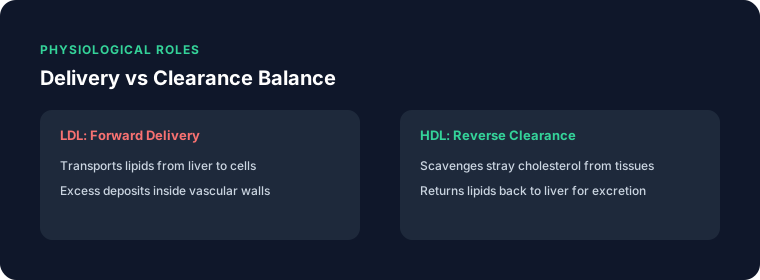
LDL stands for low-density lipoprotein. It carries cholesterol from your liver to your tissues. Extra LDL can settle in artery walls and build plaque over the years. That explains the nickname “bad” cholesterol. Labs often report it as LDL-C, meaning the cholesterol inside LDL particles.
The ISS names a desirable LDL of no more than 100 mg/dL. Still, your personal target may differ. Age, diabetes, blood pressure, smoking, and family history all play a part. Your doctor weighs these factors together. A number on paper never replaces a real conversation.
Che cos’è il colesterolo HDL?
HDL means high-density lipoprotein. Picture a street sweeper. It collects stray cholesterol and hauls it back to the liver. Higher HDL often goes with lower heart risk. That is why people call it “good” cholesterol.
Yet the story has limits. Drugs that raise HDL have not reliably prevented heart attacks. Treat HDL as a clue rather than a guarantee. Regular exercise, quitting tobacco, and swapping butter for olive oil can nudge it upward. Small habits add up faster than most people expect.
Perché LDL e HDL hanno ruoli diversi?
LDL delivers and HDL retrieves. One drops cargo at your tissues. The other carries leftovers home. When delivery outpaces pickup, cholesterol piles up in your arteries.
Consider a busy kitchen. Dirty dishes arrive faster than the dishwasher can clear them. Soon the counter overflows. Your arteries behave the same way. Therefore, doctors care about balance and not just one figure. A healthy profile keeps deliveries modest and cleanup strong. Both particles matter. Neither deserves all the blame or all the credit.
Come vengono utilizzati i trigliceridi nel profilo lipidico?
Triglycerides are fats your body stores for energy. They come from food and from your liver. Your blood carries them inside VLDL particles. Every complete lipid profile reports them next to the cholesterol values.
Here is why they matter for the math. In mg/dL, triglycerides divided by five estimate the cholesterol inside VLDL. That small piece feeds directly into the LDL formula. A level under 150 mg/dL is generally considered normal. Fasting overnight gives the cleanest reading. Alcohol and sugary meals can push the number up fast.
Come si calcola l’LDL dal profilo completo?
Here is the classic recipe, known as the formula Friedewald. Subtract HDL from total cholesterol. Then subtract one fifth of your triglycerides. For results in mg/dL, the line reads: LDL = total − HDL − (triglycerides ÷ 5). When you use mmol/L, divide triglycerides by 2.2 instead.
Try it with a total of 200, an HDL of 50, and triglycerides of 150. Triglycerides ÷ 5 gives 30. Then 200 − 50 − 30 equals 120 mg/dL. Easy. However, the shortcut loses accuracy once triglycerides pass 400 mg/dL. Then labs measure LDL directly. This is the core of any sound calcolo colesterolo.
Che cos’è il colesterolo non-HDL?
Non-HDL cholesterol equals total cholesterol minus HDL. It captures every particle that can clog arteries. That includes LDL, VLDL, and smaller remnants. Many specialists write it as non-HDL-C.
Take our example again. Subtract 50 from 200 and you get 150 mg/dL. You need no triglyceride math at all. Moreover, fasting is not strictly required. Targets often sit about 30 mg/dL above the matching LDL goal. When triglycerides run high, this number can tell you more than the Friedewald estimate does.
Perché non bisogna guardare un solo numero?
A single value misleads easily. A lower LDL looks wonderful until you notice sky-high triglycerides. A great HDL feels reassuring until blood pressure and blood sugar enter the picture. Real risk emerges from the full pattern.
Furthermore, labs vary day to day. Illness, stress, and recent meals shift results. Doctors therefore compare trends across several tests. The American Heart Association explains this broader view at heart.org. Remember that no formula declares you healthy or in danger on its own. Your clinician connects the numbers to your life. Good calcolo colesterolo supports that discussion and never replaces it.
Come confrontare i principali valori lipidici
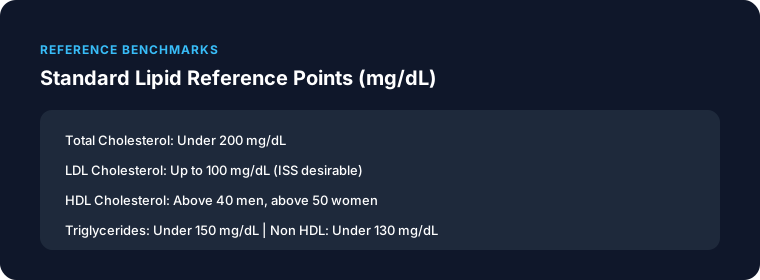
A side-by-side view helps. The table below lists common reference points in mg/dL. Treat them as general guides rather than personal goals.
| Value | What it shows | Common reference |
|---|---|---|
| Total cholesterol | All cholesterol combined | Under 200 |
| LDL | Cholesterol delivered to tissues | Up to 100 (ISS) |
| HDL | Cholesterol sent back to the liver | Above 40 men, 50 women |
| Triglycerides | Circulating fats | Under 150 |
| Non-HDL | All artery-clogging particles | Under 130 |
Notice how each row answers a different question. Together they form a complete picture. Another calcolo colesterolo habit worth keeping: save each report and compare the columns year over year.
Conclusione: capire il profilo del colesterolo
You now know the cast. Total cholesterol sets the stage. LDL delivers. HDL cleans up. Triglycerides feed the formula. Non-HDL adds a handy safety net.
Next time a report lands in your inbox, try the math yourself. Subtract carefully and check your units. Then bring your questions to your doctor. Understanding calcolo colesterolo turns confusing lab sheets into a clear conversation. That knowledge helps you make calmer, smarter decisions about your heart.